At Aries Industries, we assess the environmental impact of our presses through a Life Cycle Assessment (LCA). This approach enables us to evaluate the overall footprint of our machines, from production to end-of-life, with a clear objective: better understanding to design better.
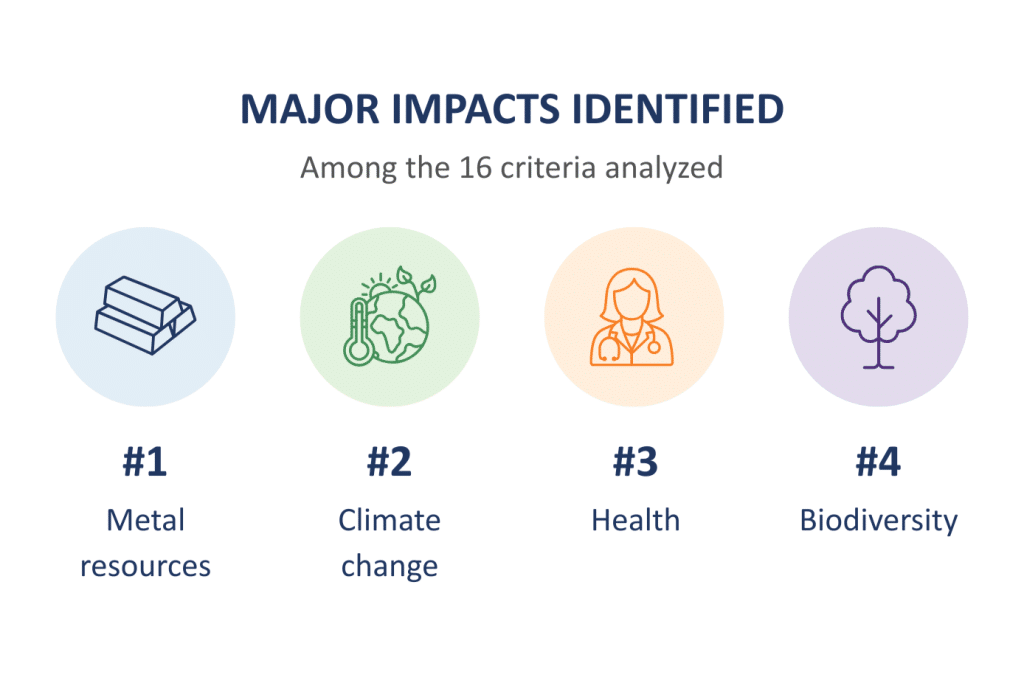
LCA is an eco-design methodology that goes beyond CO₂ emissions alone. It considers a wide range of environmental impacts, including the depletion of natural resources, water acidification, and effects on biodiversity. In our study, 16 criteria were analyzed to provide a comprehensive, multi-criteria view of our equipment.
We applied this methodology to an existing Hot Forming presses, using design data provided by our engineering department, along with sourcing information from our procurement team. Each stage of the life cycle was examined, from raw material production, primarily steel, through manufacturing, transport, and assembly, to final use by the customer.
What the study reveals
For a complete press, the impact of raw materials alone represents approximately 275 tonnes of CO₂ equivalent. The main challenges identified are greenhouse gas emissions and the depletion of metal resources, both directly linked to the significant amount of steel and metals used in our machines.
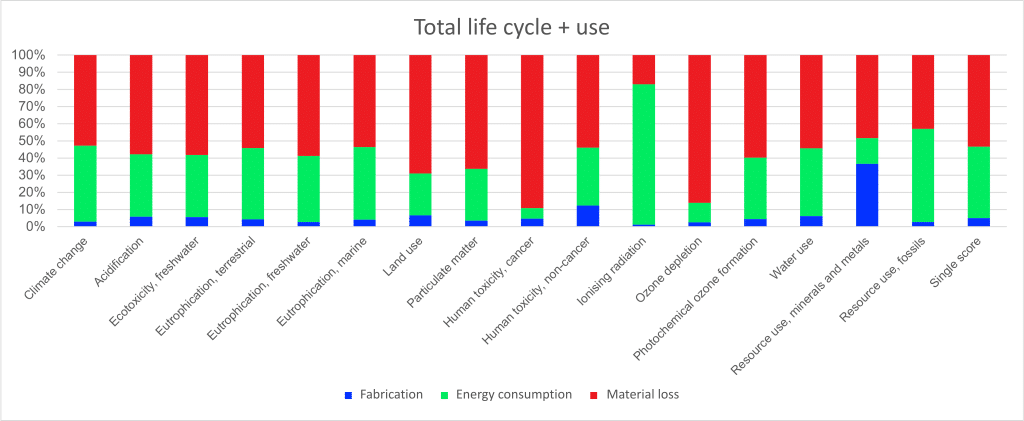
However, the most striking result lies in how impacts are distributed across the entire life cycle. In the case of our Hot Forming presses, the manufacturing phase, despite being highly material-intensive, accounts for only a limited share of the overall footprint. In reality, it is the use phase, driven by energy consumption and material losses (notably titanium), that represents the majority of environmental impacts.
In other words, the environmental footprint of an Aries press is not determined solely at the design stage, but largely during its operation. For example, reducing a press’s electricity consumption by just 5% would save as much CO₂ as that generated during its entire manufacturing phase.
Integrating eco-design from the early stages
Building on this study, a parametric calculation tool has been developed for our Hot Forming presses. It allows us to quickly estimate both carbon impact and metal resource depletion from the early design phases, based on a simplified bill of materials.
This tool opens up new possibilities. It helps guide our design decisions, compare technical and industrial alternatives, and provide our customers with a transparent view of the environmental impact of their future equipment.
Still under development, it already represents a concrete step toward fully integrating eco-design into the development of our presses and, in the future, across all our machines.