Hot Forming & SPF parts manufacturing
Scroll
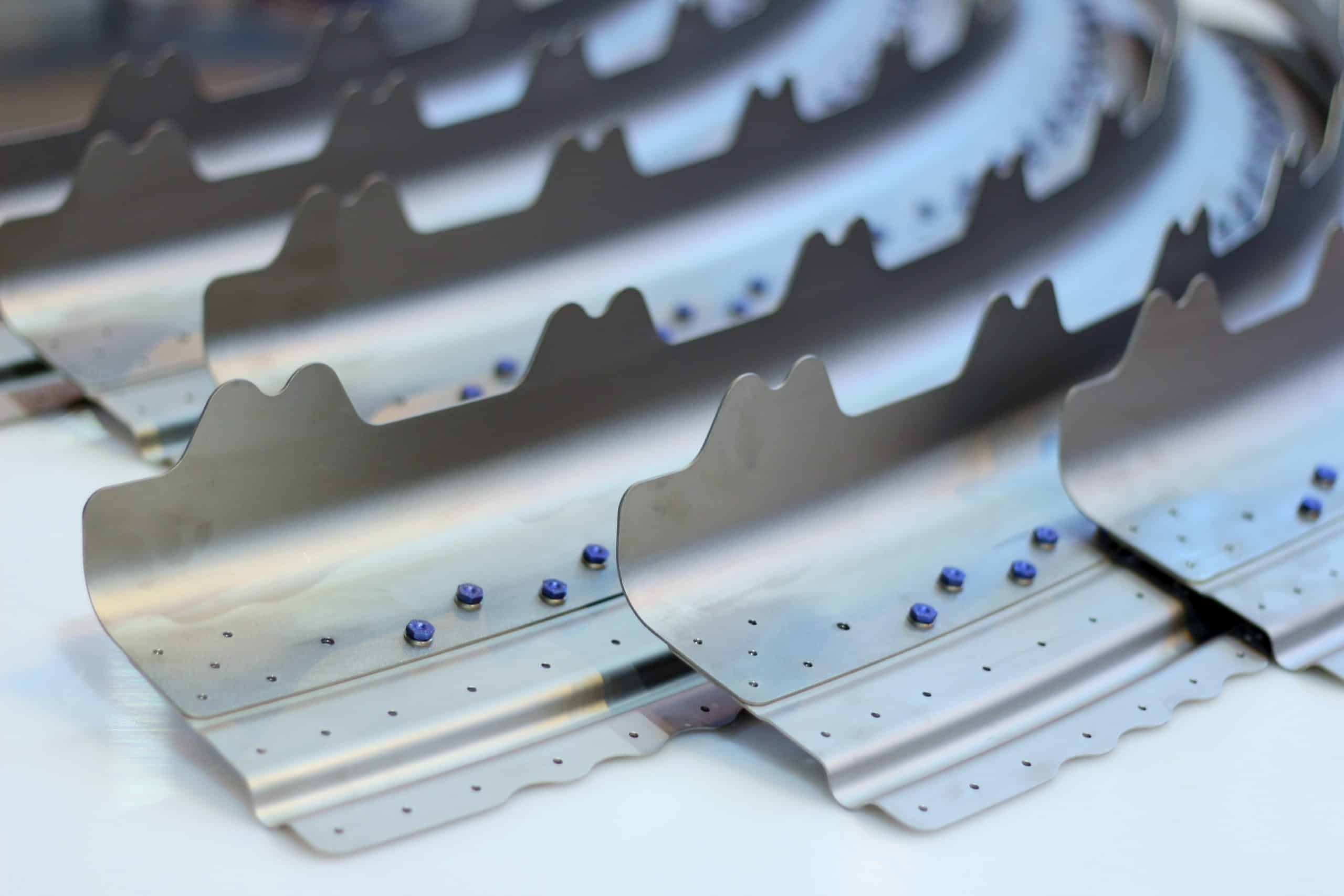
Hot Forming equipment and technologies
Hot Forming machines: configuration and capabilities
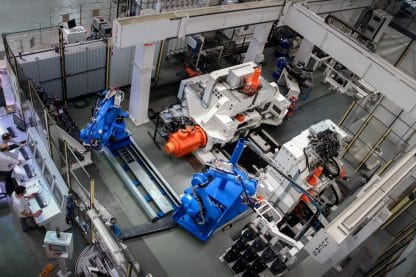
Hot Forming presses are specialized equipment designed to operate under extreme thermal and mechanical constraints. They may integrate several critical systems:
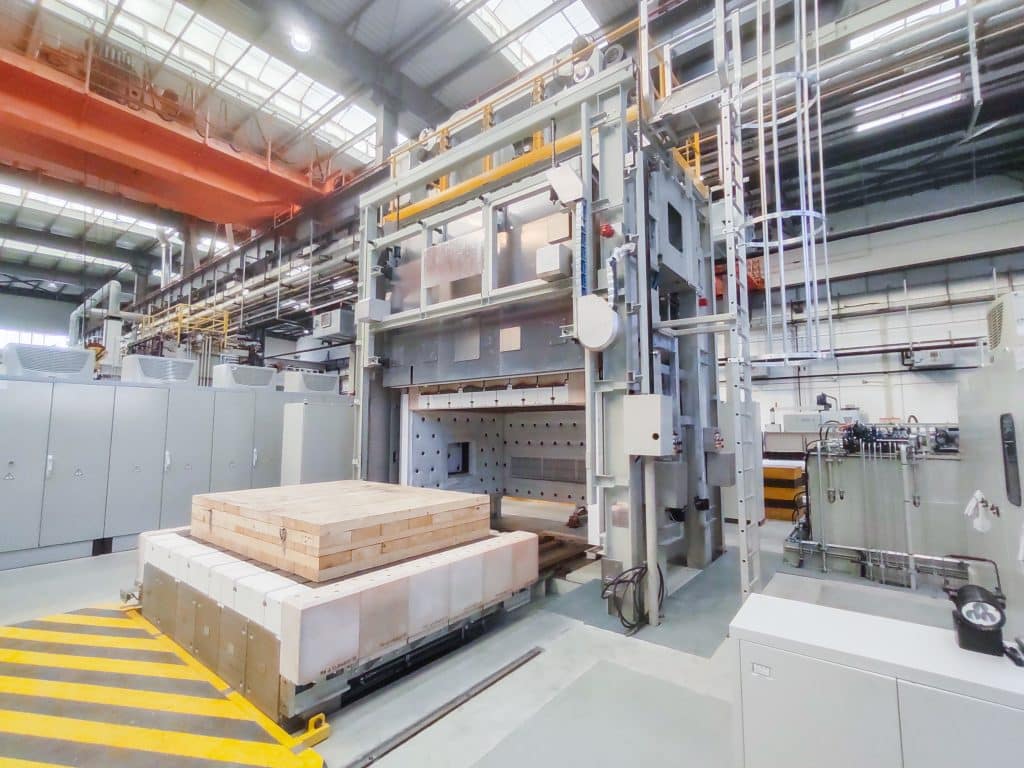
- Heating systems: sheet preheating furnaces with fine thermal regulation to guarantee temperature homogeneity and material properties.
- Hydraulic or mechanical presses: capacities ranging from a few tens to several hundreds tons of force, with precise control of punch descent speed and pressure holding.
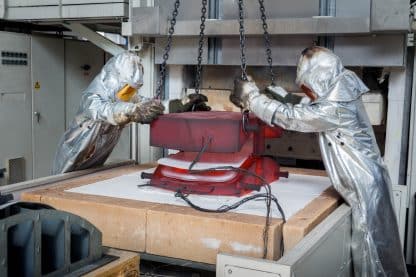
- Refractory tooling: dies and punches in special steels resistant to high temperatures and repeated thermal cycles, custom-designed for each part geometry.
- Controlled cooling systems: to control cooling rate and optimize final metallurgical properties.
Numerical simulation: guaranteeing conformity from design
Finite element simulation plays a crucial role in hot forming optimization. It enables prediction of:
- Stress and strain distribution
- Stress concentration zones
- Final thicknesses after forming
- Springback
- Optimal process parameters (temperature, speed, pressure)
This numerical approach significantly reduces physical iterations and accelerates new tooling development.
Materials and Applications
Compatible Materials
Industrial Sectors
Aerospace applications: concrete examples
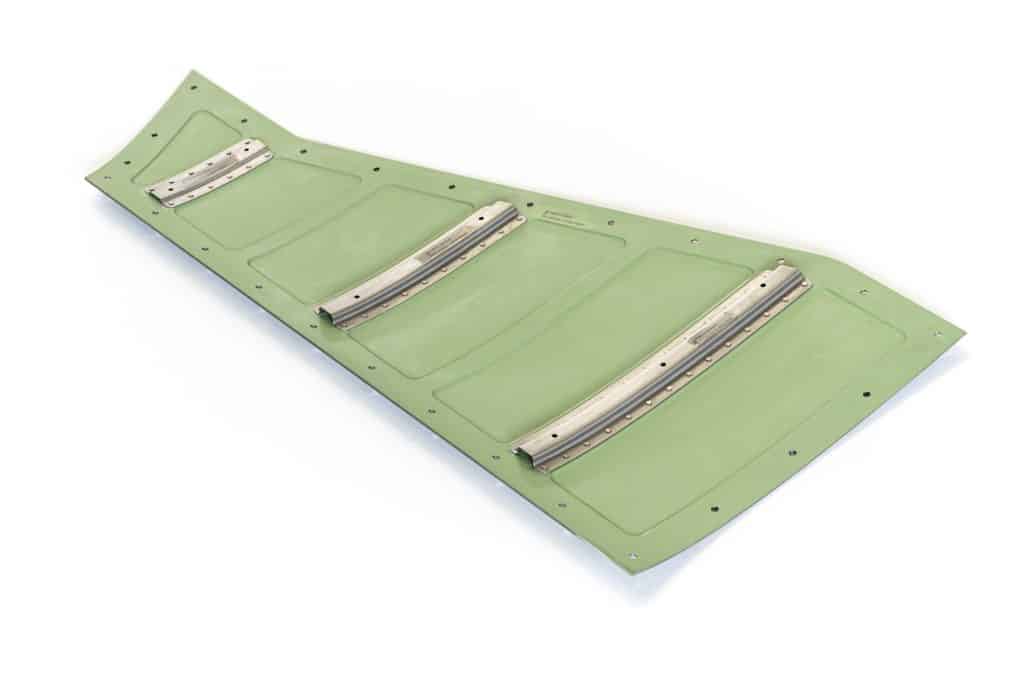
Advanced aerodynamic components
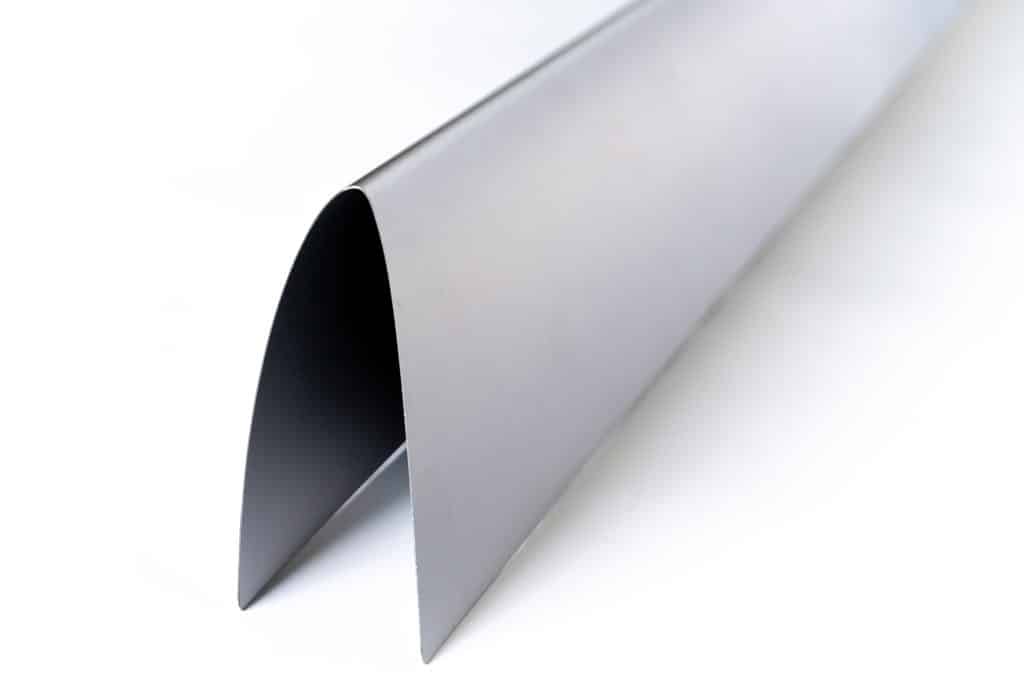
Our Hot Forming process delivers superior quality parts for critical aerodynamic surfaces such as wing leading edges and engine nacelles. By precisely shaping titanium at elevated temperatures, we ensure optimal mechanical strength and durability while maintaining tight tolerances required for aerodynamic efficiency
Rotary components with maximum reliability
Hot Forming enables the production of complex rotating parts like helicopter blades that demand exceptional mechanical properties and high fatigue resistance. Our controlled process ensures material property uniformity and dimensional accuracy, providing parts capable of withstanding extreme operational stresses.
Critical structural parts
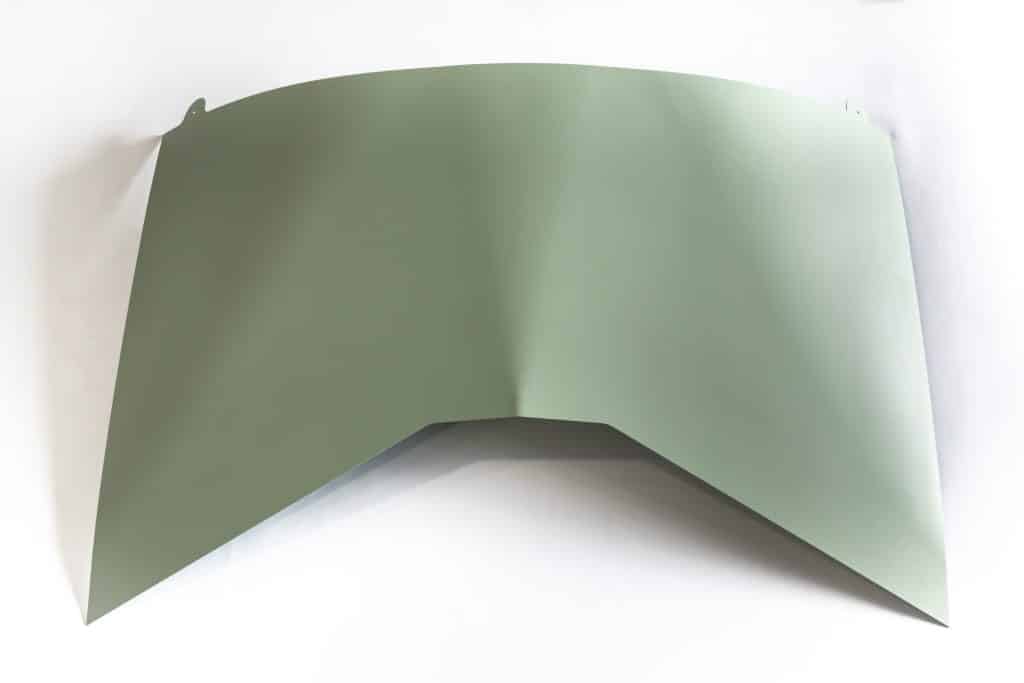
Our Hot Forming technology enables the production of impact-resistant fuselage parts as well as structural components engineered to withstand high temperatures. These parts offer exceptional mechanical strength and durability, ensuring reliable performance in the most demanding environments.
Hot Forming vs Superplastic Forming (SPF): understanding the differences
Superplastic Forming: principle and characteristics
How does the superplastic process work?
Technical comparison: Hot Forming vs SPF
Criteria
Hot Forming
Superplastic Forming (SPF)
Forming temperature
~700°C
850-950°C
Cycle time
10 min to 1h
Several hours (typically 2-4h)
Material elongation
Limited and controlled (<100%)
Very high (500% to 1000%)
Thickness reduction
Controlled, uniform
Variable, significant thinning possible
Production costs
Standard
+50% compared to Hot Forming
Energy consumption
Reduced
High (temperature and duration)
Preferred applications
Series production, moderate geometries
Very complex geometries ,prototypes and small series,
Mechanical properties
High and uniform
Good but potentially thinned areas
Which process to choose?
Much more than a parts supplier, a complete industrial partner
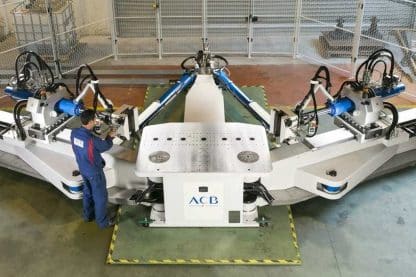
Pioneer of Hot Forming and Superplastic Forming, Aries Industries has been designing HF and SPF machines for the biggest names in aerospace around the world. Building on the group’s long-standing business, we have delivered more than 40 Hot Forming and 100 Superplastic Forming presses worldwide.
Complete expertise across the entire value chain
Our others Expertises
About
Aries Industries
With decades of expertise in metal forming solutions, Aries Industries is a global leader in HF/SPF Aerospace parts and metal-forming presses for aerospace, defense, and industrial applications.Trusted by leading OEMs worldwide, our solutions support the most demanding applications, from blisk production and critical structural components to small connecting parts.