Special Machine Design & Build
Scroll
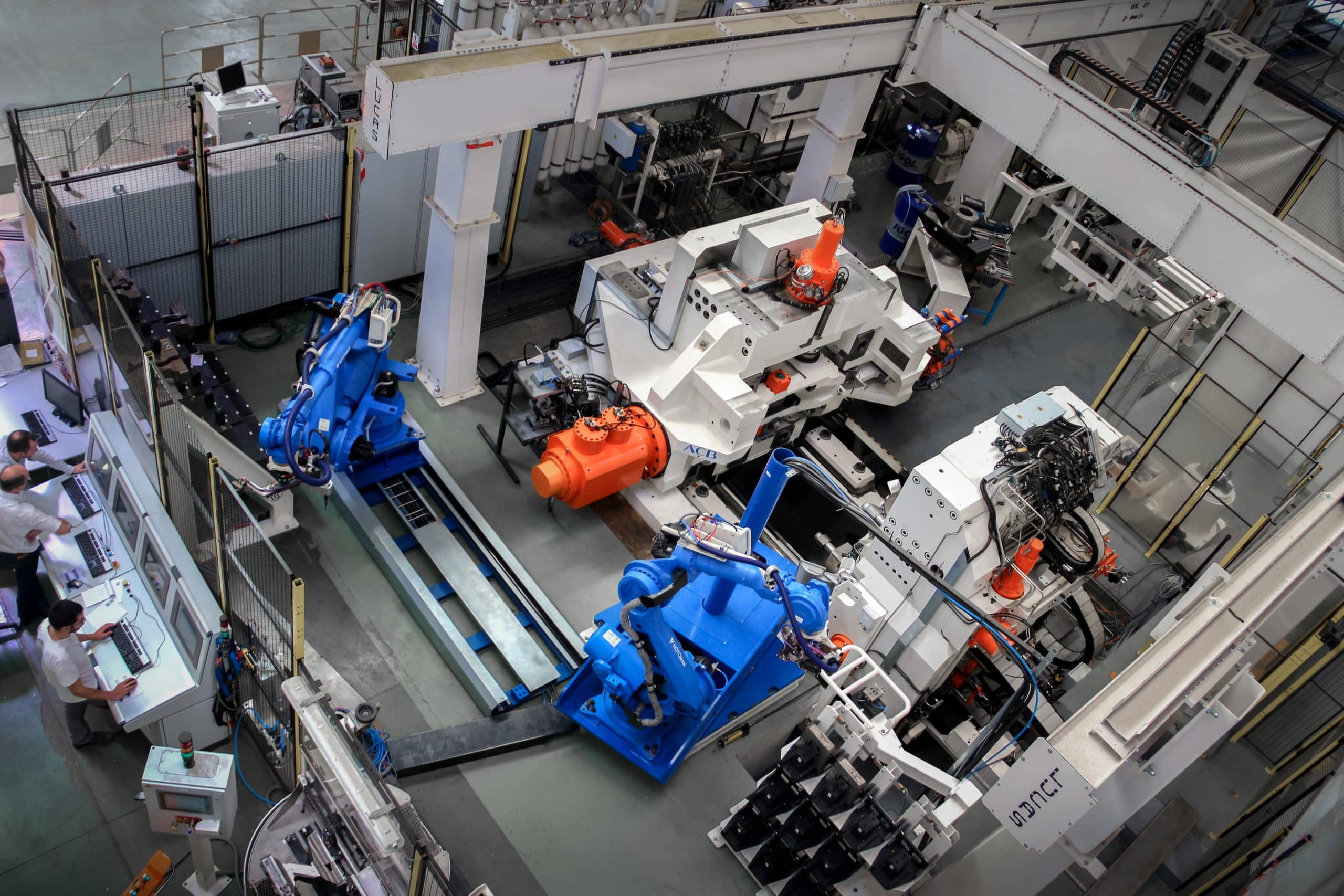
What is Linear Friction Welding
Materials
The process is suitable for a large variety of materials: titanium and titanium alloys (such as Ti-6Al-4V), nickel-based superalloys, aluminum alloys, stainless steels (austenitic and martensitic grades), low-alloy and carbon steel, copper alloys, and complex high-performance alloys. Linear Friction Welding can join dissimilar materials, including couples of materials impossible to weld with conventional welding methods.
This solid-state joining capability is particularly valuable for combining materials with different melting points or thermal expansion coefficients such as titanium to steel or aluminum to copper which would be extremely challenging or impossible with traditional fusion welding techniques.
Industries
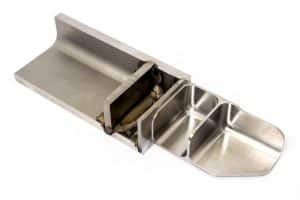
This technology is ideally suited for critical components made from costly or hard-to-weld materials, where high-quality joints and machine-controlled, in-process quality assurance are essential. It is applicable across a wide range of industries, including aerospace, space, automotive, and defense.
Linear Friction Welding machines are increasingly adopted in North America, England, Europe and China, where manufacturers seek to reduce material costs and improve production efficiency for high-performance parts.
Applications in the aerospace industry
The ultimate process for high-performance blisks
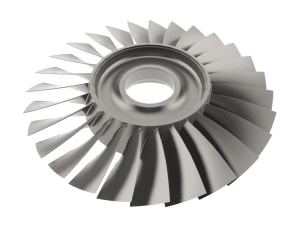
For several decades, Aries Industries has been designing, manufacturing, and supplying Linear Friction Welding (LFW) machines to aircraft engine manufacturers worldwide for the production of blisks (bladed disks), also known as IBRs or IBFs (Integrally Bladed Rotors or Fans). Traditionally machined from solid titanium or nickel-based blocks, blisks benefit significantly from LFW, which reduces the buy-to-fly ratio and machining time by minimizing material waste. Moreover, the process allows the blade and the disk to be made from different materials for example, a disk in high-strength titanium alloy, and precision-forged blade in a more ductile titanium alloy. Additionally, it enables the welding of hollow blades that have been formed and calibrated using Aries Industries’ hot forming or superplastic forming equipment.
Today, Aries Industries is the technical benchmark for blisk production machines, already trusted by leading manufacturers of civil and military aircraft engines in the aero industry.
Two main Linear Friction Welding (LFW) configurations are used for blade-to-disk joining: chordal mode, where the oscillation follows the chord of the blade foot, and tangential mode, where the motion is perpendicular to the disk axis. Each has its specific advantages and constraints, and optimal weld quality requires a machine specifically engineered for the chosen mode.
Aries Industries is proud to be the only company in the world with proven experience in designing and building Linear Friction Welding machines for both chordal and tangential blisk welding. This unique expertise enables us to provide comprehensive support to customers in evaluating the most suitable welding mode for their application.
Aircraft structural parts
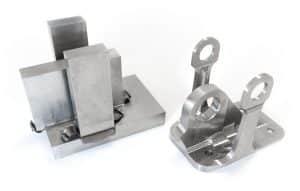
Significant cost savings can also be achieved in aero-structural components. Many titanium parts used in aircraft structures are well-suited to production using Linear Friction Welding. By machining these components from near-net-shape LFW-tailored blanks instead of large solid blocks, manufacturers can dramatically reduce the cast of both raw material usage and machining, without compromising performance or quality.
Typical applications include fuselage frames, wing ribs, door components, seat rails, and various brackets and fittings all critical structural elements where the combination of high strength and low weight is essential.
Our LFW machines
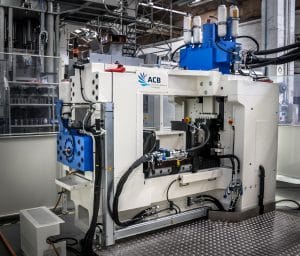
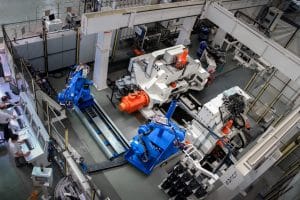
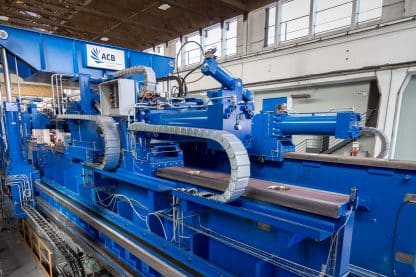
Aries Industries has developed three types of Linear Friction Welding (LFW) machines, each available in multiple models depending on the required maximum forging force.
LFD: compact and versatile
Floor-mounted, the LFD machine is designed to offer a large work surface in a compact format. Ideal for small and medium-sized aeronautical structures such as clips, brackets, hinges and fittings. Also suitable for automotive parts and process development. The LFD series is particularly popular for contract welding operations and research institutions looking for a versatile, low-force friction welder for material development and process optimization.
LFT: tailored for tangential blisks
This range of machines is specially optimized for the production of blisks in tangential mode. The LFT linear friction welding machines feature the largest tooling envelope in their class, making them ideal for high-volume blisk manufacturing in the aerospace industry.
LFS: performance and versatility
Technical support, R&D, prototyping and production at Aries Industries
Aries Industries provides extensive and comprehensive technical support to its customers at every stage of their project and Technology Readiness Level (TRL), from the process discovery to the full-scale production.
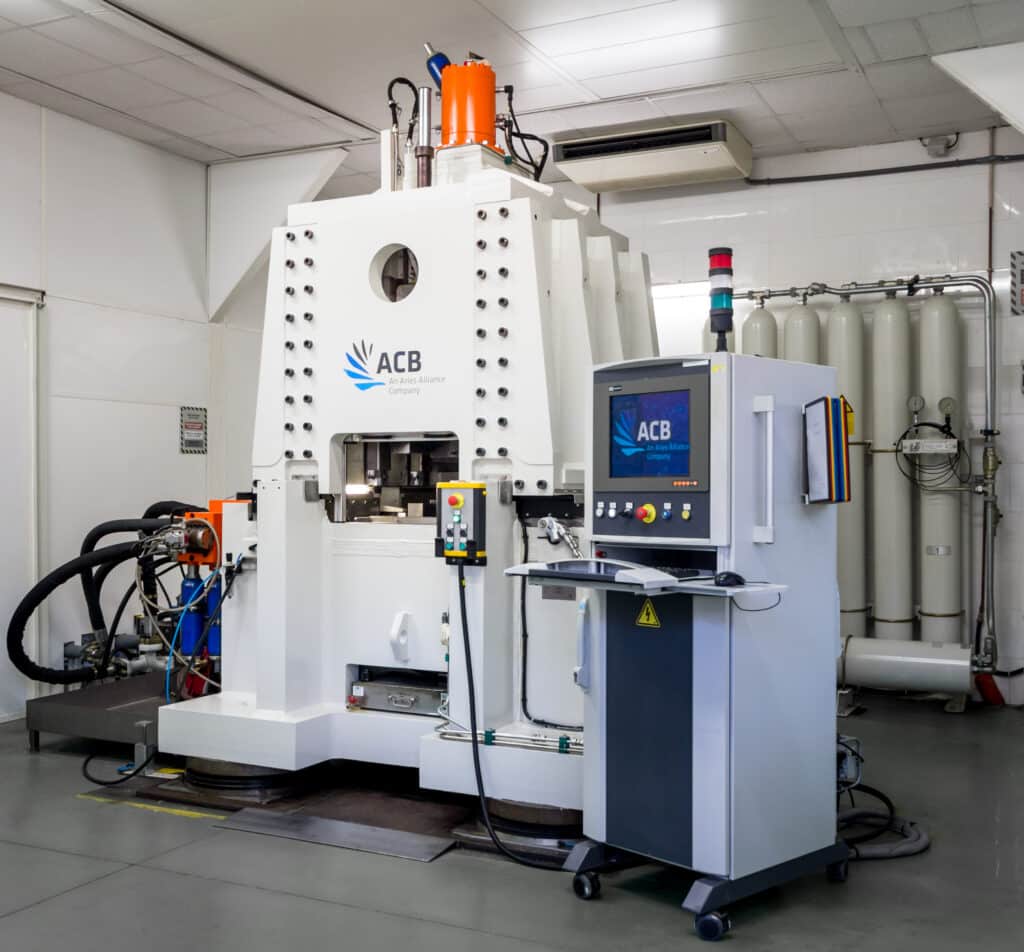
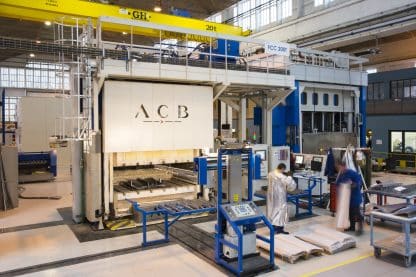
To support this commitment, we have developed the MDS30 machine, available for both R&D and production at our facilities. This machine offers the same build quality, performance, and process capabilities as the production systems delivered to the aerospace industry. The MDS30 has been qualified for production by two major aircraft OEMs.
At low cost and within short lead times, we can conduct Linear Friction Welding (LFW) campaigns on simple coupons, application-representative specimens, or prototype parts. We assist in developing tailored Design of Experiments (DOE) and carry out detailed characterization of welded samples, providing customers with valuable insights into optimal LFW parameters and the corresponding mechanical and metallurgical properties for their application.
We have proven experience delivering this type of support as part of large-scale industrial projects involving the development of new production equipment. Our involvement helps customers save time, reduce technical risks, and accelerate the transition from concept to full industrialization.
Our technical support can cover a broad range of activities including equipment and process specification, pre-weld part design, tooling design, prototyping, tooling and process setting-up on the machine, training for operators, maintenance and method teams, and assistance up to First Article Inspection (FAI).
Whether you’re exploring Linear Friction Welding for the first time or scaling up to full production, our team provides the expertise and equipment you need. From initial feasibility studies using our friction welder full-sized development system to final qualification, we support you at every step.
Reduce your environmental footprint and dependency to strategic materials
In addition to being costly and difficult to machine, materials like titanium have a significant environmental footprint: the greenhouse gas emissions associated with titanium production are approximately 15 times higher than those of steel.
Based on multiple case studies conducted by Aries Industries in collaboration with aircraft manufacturers, it is estimated that operating a single LFW machine for the production of titanium structural aircraft parts can save around 300 tonnes of titanium per year representing a reduction of approximately 10,000 tonnes of CO₂ equivalent emissions.
This dramatic reduction in material consumption also applies to other high-value materials including nickel alloys, stainless steel, and specialty copper alloys. By creating near-net-shape parts through Linear Friction Welding, manufacturers significantly reduce their dependence on raw material suppliers and minimize waste sent to recycling or disposal.
In addition, the procurement of titanium is increasingly becoming a geo-strategic concern, due to limited global supply sources and growing demand in aerospace and defense sectors. Linear Friction Welding (LFW) offers a concrete solution to help reduce dependency on this critical and valuable resource by significantly improving material utilization and reducing waste.
As sustainability becomes a competitive imperative, Linear Friction Welding positions forward-thinking manufacturers to meet both environmental regulations and customer expectations while maintaining the highest standards of quality and performance.
Save on your production
300 tonnes of titanium save
per year
10k t of CO2 equivalent emissions
How Linear Friction Welding compares
to other processes
Understanding the differences between Linear Friction Welding and other welding methods helps manufacturers select the optimal process for their application:
Linear Friction Welding vs. Rotary Friction Welding:
While rotary friction welding requires one part to rotate (limiting it to axisymmetric components), LFW uses linear reciprocating motion, enabling the joining of complex, non-round geometries like blisk blades. Both are solid-state processes that avoid melting.
Linear Friction Welding vs. Friction Stir Welding:
Friction Stir Welding uses a rotating tool to join materials (typically aluminum sheets), while LFW joins parts by moving them against each other. LFW is better suited for thick sections and high-strength materials like titanium alloys and nickel superalloys.
Linear Friction Welding vs. Fusion Welding:
Traditional fusion welding melts the material, which can introduce porosity, cracking, and residual stresses. LFW’s solid-state process eliminates these defects, producing forged-quality joints with superior mechanical properties especially critical for aerospace applications.
Ready to transform your manufacturing with Linear Friction Welding technology?
Contact Aries Industries today to discuss how our advanced LFW machines and technical expertise can help you reduce costs, improve quality, and achieve your sustainability goals.
Our others Expertises
About
Aries Industries
With decades of expertise in metal forming solutions, Aries Industries is a global leader in HF/SPF Aerospace parts and metal-forming presses for aerospace, defense, and industrial applications.Trusted by leading OEMs worldwide, our solutions support the most demanding applications, from blisk production and critical structural components to small connecting parts.